
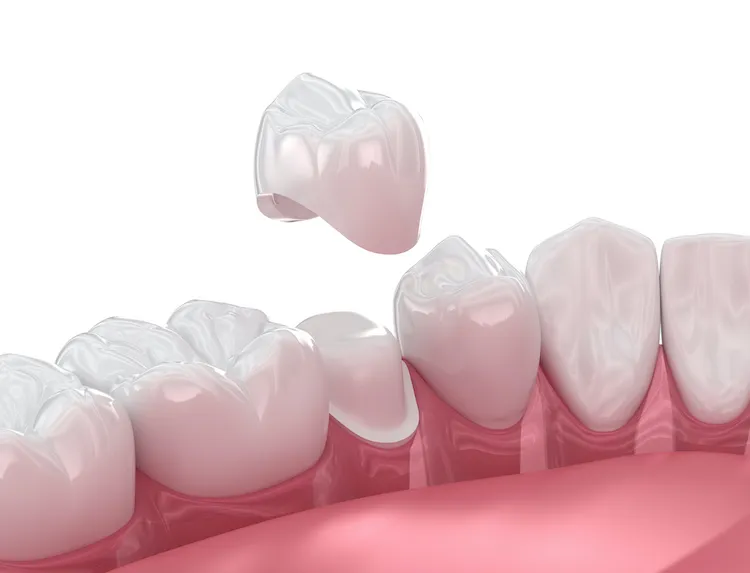
So you’ve got a new dental crown. Maybe you had a tooth that needed saving, or maybe you just wanted to smile without worrying about a cracked tooth. Either way, congratulations. You’ve made a solid investment in your mouth. Now you’re probably wondering, “How do I take care of this thing?”
The short answer is pretty much like a regular tooth. But if you grind or clench your teeth at night, the rules change. Grinding puts more stress on your crowns than almost anything else. Most patients need TMJ treatment before grinding can crack the material, loosen the cement, or damage the tooth underneath.
Dr. Natalia Antley at Carolina Dentistry has advanced training in treating bite problems and occlusal disorders, including TMJ. She’s a Dawson Scholar, which means she understands how your bite affects every restoration in your mouth. Here’s how to protect your crown if you grind.
Why Grinding Damages Crowns Faster Than Normal Wear
Your crown is strong and designed to handle years of chewing. But chewing is a controlled force. You bite down, the food breaks, you swallow. The pressure lasts a fraction of a second.
Grinding is different. When you clench or grind at night, you apply sustained pressure for minutes at a time. That pressure is often much stronger than normal chewing. Over months and years, it wears down the crown, the cement, and the tooth underneath.
Tooth grinding also creates sideways forces. Your teeth are designed to take pressure from above. Side-to-side forces push against the crown at angles it wasn’t built to handle. That’s how cracks start and how crowns come loose.
How to Know If You Grind Your Teeth
Many patients don’t realize they grind their teeth. It happens during sleep, so you’re not aware of it. Here are signs worth paying attention to:
- You wake up with a sore jaw or a dull headache
- Your partner tells you that you grind at night
- Your teeth feel sensitive in the morning.
- You notice flattened or worn edges on your natural teeth.
- You clench during the day without realizing it, especially when stressed.
If any of these sound familiar, tell Dr. Antley at your next visit. She’ll evaluate your bite and look for signs of grinding. Her Dawson training includes specific protocols for diagnosing occlusal disorders, which is the clinical term for bite problems like grinding.
The Night Guard Question
If you grind, a you need a night guard. A custom night guard fits over your teeth and absorbs the force of grinding. Instead of your crown taking the pressure, the guard does.
Store-bought night guards aren’t the same. They’re bulky, they don’t fit precisely, and they can actually make grinding worse by changing how your teeth meet. Carolina Dentistry makes a custom night guard from a digital scan of your mouth. It fits exactly to protect your crown, your natural teeth, and your jaw.
Dr. Antley will evaluate whether you need a night guard during your exam. If you already have one and it’s more than a few years old, bring it in. It may need to be replaced or adjusted.
Your Daily Routine With a Crown
You don’t need special tools or a long ritual. Just add a little extra attention to your normal brushing and flossing.
Use a soft-bristled toothbrush and fluoride toothpaste. Pay extra attention to the gumline around your crown. Brush at a 45-degree angle so the bristles slip just under the gum edge. Be thorough but gentle. You’re not scrubbing a pan.
When you floss, Don’t pop the floss straight down and snap it back out. Instead, let the floss slide gently between your crowned tooth and its neighbor. Pull the floss out through the side instead of yanking it back up. That keeps you from pulling the crown loose over time. If that sounds tricky, ask Dr. Antley or your hygienist to show you at your next cleaning. It takes ten seconds to learn.
What to Avoid Beyond Grinding
Grinding is the biggest threat, but it’s not the only one. A few other habits can shorten your crown’s life.
Chewing ice is hard on every tooth, crowns included. Using your teeth as tools, like opening packages or tearing tape, puts stress on the crown in ways it wasn’t designed to handle. Sticky or hard candies can loosen the cement or crack the material itself.
If you play contact sports, wear a mouthguard. A custom sports guard from Carolina Dentistry protects your crown and your other teeth from impact.
Call If You Notice These Dental Crown Warning Signs
A well-made crown should feel like part of your mouth. If you notice any of these, call our Devine Street office.
The crown feels higher than your other teeth when you bite down. You feel a sharp edge with your tongue. Food gets stuck around that tooth more than usual. You notice a dark line at the gumline. The crown feels loose or moves when you touch it.
None of these are emergencies, but they’re worth checking before they become bigger problems. A loose crown can often be re-cemented if you act quickly. A cracked crown usually needs replacement.
Protect Your Oral Health Today
Dr. Antley and her team are here to help you protect your investment. We’d much rather do a quick check than a full replacement. That’s just good sense.
Call us at (803) 500-4146 or schedule your appointment online. Let’s keep your crown healthy.